
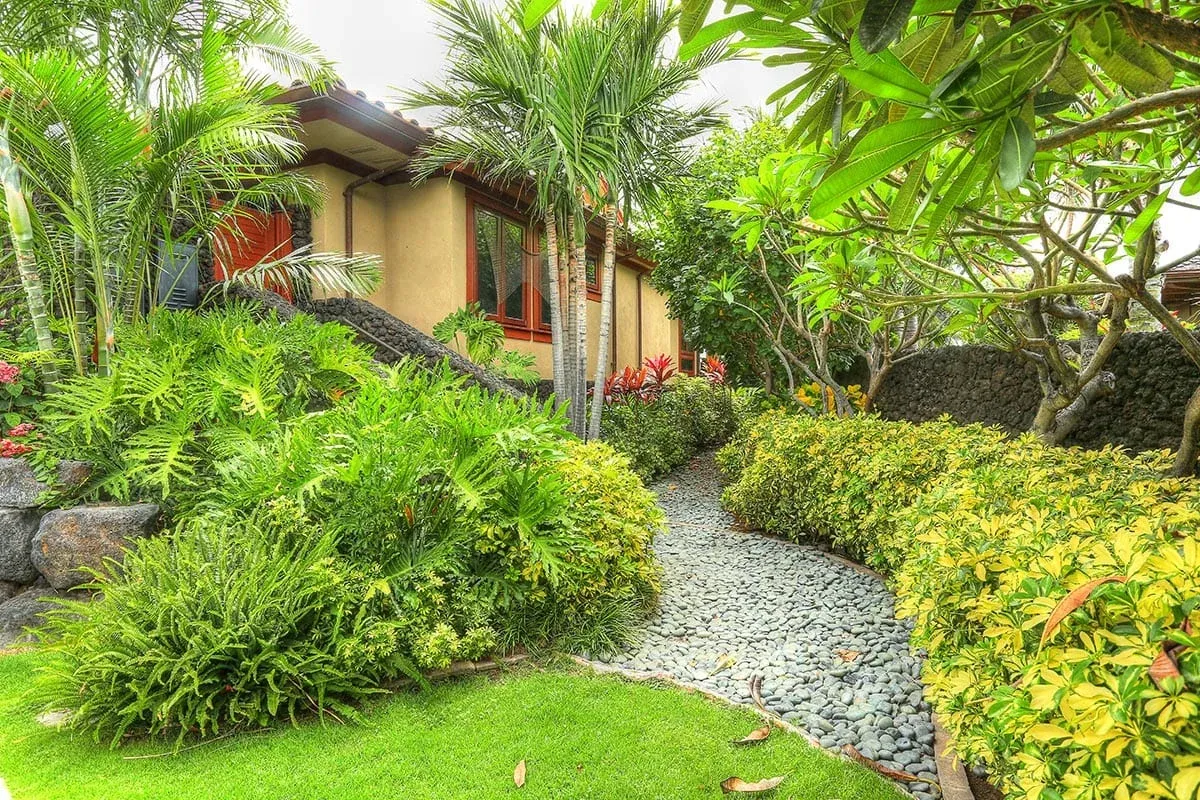
Yes, humidity affects irrigation in Hawaii.
When humidity is high, moisture generally evaporates more slowly from soil and plant surfaces. This can help landscapes retain water longer and may reduce how frequently irrigation is needed. During hotter, drier, or windier conditions, water can evaporate more quickly, increasing plant water needs.
However, humidity is only one factor to consider when creating a Hawaii irrigation schedule. Rainfall, heat, wind, soil type, sun exposure, plant variety, elevation, and whether a property is located on the windward or leeward side of an island can all affect watering needs.
Because Hawaii’s weather varies significantly between locations, using the same irrigation schedule throughout the year may lead to overwatering, dry areas, plant damage, and higher water bills.
How Humidity Affects Irrigation
Humidity affects how quickly moisture moves from soil and plants into the surrounding air.
During humid conditions, soil may remain moist longer, especially after rain or irrigation. If a sprinkler system continues operating on its usual schedule, the landscape may receive more water than it needs.
When humidity is lower, heat, direct sunlight, and wind can cause moisture to leave the soil and plants more quickly.
This does not mean irrigation should be turned off whenever the air feels humid. Soil conditions matter more than humidity alone. The soil surface may appear damp while the root zone remains dry, or the ground may stay saturated even when the weather feels warm.
Checking soil moisture before watering is one of the best ways to prevent both overwatering and underwatering.
Humidity, Heat, and Water Retention
Humidity should be considered together with heat and soil conditions.
A hot, humid day may still increase plant water demand, especially in areas exposed to full sun. Landscapes near pavement, rock walls, buildings, and driveways may also experience additional heat.
Soil type affects how long water remains available. Dense soil may retain moisture and become saturated, while rocky or porous soil may drain quickly. On sloped properties, long watering cycles can create runoff before water reaches plant roots.
Shorter watering cycles with soaking periods between them may provide better results than one long cycle.
Humidity, Wind, and Sprinklers
Hawaii’s trade winds can also affect irrigation efficiency.
Wind may cause sprinkler spray to drift away from the intended area, creating dry spots, uneven coverage, and wasted water on sidewalks, roads, or buildings.
Wind can also increase moisture loss from soil and plants. A humid but windy day may therefore require different irrigation settings than a humid, calm day.
Sprinkler heads should be positioned and adjusted so water reaches the landscape evenly.
How Hawaii’s Seasons Affect Irrigation
Hawaii generally has a warmer, drier season and a cooler, wetter season. However, conditions vary by island, elevation, and location. These seasonal changes affect rainfall, soil moisture, humidity, and irrigation frequency.
Warmer and Drier Months
During warmer months, higher temperatures and stronger sunlight may increase landscape water needs. Leeward areas may become especially dry, while some windward areas continue receiving regular rainfall.
Even when humidity feels high, exposed soil can dry quickly in intense sun. Lawns, container plants, newly installed landscaping, and shallow-rooted plants may need closer monitoring.
Rather than automatically increasing watering times, property owners should check soil moisture and adjust individual irrigation zones based on actual conditions.
Cooler and Wetter Months
During wetter periods, frequent rainfall and cloud cover can help soil retain moisture longer. Irrigation systems that continue operating on summer settings may waste water and oversaturate the landscape.
Too much water can contribute to runoff, weeds, root problems, and fungal growth. Reducing irrigation frequency during rainy weather can improve water efficiency and support healthier plants.
Windward and Leeward Conditions
Location has a major effect on irrigation needs in Hawaii. Windward areas are generally wetter and more exposed to moist trade winds. Leeward areas, the “downwind” side, are often sunnier and drier.
Even within one property, shaded garden beds, sunny lawns, slopes, and areas near pavement may require different watering schedules. An efficient irrigation system should account for these microclimates instead of applying the same amount of water to every zone.
How to Adjust Irrigation for Hawaii’s Humidity
Check the soil several inches below the surface before watering. During humid or rainy periods, the soil may remain moist longer, allowing you to reduce irrigation frequency. During hotter, drier, or windier conditions, plants may need closer monitoring.
Early morning is generally the best time to irrigate because temperatures are cooler and water has time to soak into the soil before daytime heat increases evaporation. For slopes or soil that absorbs water slowly, shorter watering cycles with breaks between them can reduce excessive water.
Signs that an irrigation schedule may need adjustment include constantly wet soil, dry patches, runoff, irrigation during rainfall, or an unexpected increase in the water bill.
About Irrigation Solutions and Landscape
Irrigation Solutions and Landscape helps Hawaii property owners maintain healthy landscapes while optimizing irrigation efficiency. As local Hawaii natives, our team understands how Hawaii’s humidity, rainfall, heat, wind, soil, and local microclimates affect irrigation performance.
Our services include:
We evaluate irrigation schedules, sprinkler coverage, water pressure, controllers, valves, pipes, and overall system performance. We can identify leaks, inefficient equipment, and scheduling problems that may be increasing water use. A properly managed irrigation system should respond to changing landscape and weather conditions accordingly.
Contact Irrigation Solutions and Landscape to improve water-use efficiency, address system problems, and create a better landscape.